Monday, 18 May 2015

Infant antibiotic use linked to adult diseases

A new study led by researchers at the University of Minnesota has found a three-way link among antibiotic use in infants, changes in the gut bacteria, and disease later in life. The imbalances in gut microbes, called dysbiosis, have been tied to infectious diseases, allergies and other autoimmune disorders, and even obesity, later in life.
The study, led by Biomedical Informatics and Computational Biology program graduate student fellow Pajau Vangay, also developed a predictive model with potential clinical importance for measuring healthy development of bacteria in the gut of young children. The findings were published today in the scientific journal Cell Host & Microbe.
Antibiotics are by far the most common prescription drugs given to children. They account for about one-fourth of all medications prescribed to children, with a third of these prescriptions considered unnecessary. Other studies have shown profound short- and long-term effects of antibiotics on the diversity and composition of the bacteria in our bodies, called our microbiome.
"Diseases related to metabolism and the immune system are increasing dramatically, and in many cases we don't know why," said the study's senior author Dan Knights, a computational biologist and assistant professor in the University of Minnesota's Department of Computer Science and Engineering and Biotechnology Institute. "Previous studies showed links between antibiotic use and unbalanced gut bacteria, and others showed links between unbalanced gut bacteria and adult disease. Over the past year we synthesized hundreds of studies and found evidence of strong correlations between antibiotic use, changes in gut bacteria, and disease in adulthood."
Knights and his colleagues developed a framework to map how antibiotics may be acting in the gut to cause disease later in life. In the case of allergies, for example, the use of antibiotics may eradicate key gut bacteria that help immune cells mature. These cells would have been essential for keeping the immune system at bay when confronted with allergens. Even if these bacteria return, the immune system remains impaired. Related to obesity, antibiotic-induced changes in the gut microbiota resulted in increased levels of short-chain fatty acids that affect metabolism.
The study also examined the development of bacteria in the gut. Researchers demonstrated that an infant's age could be predicted within 1.3 months based on the maturity of their gut bacteria. This finding could lead to a clinical test and interventions for children whose microbiome is developmentally delayed due to antibiotics or other factors.
"We think these findings help develop a roadmap for future research to determine the health consequences of antibiotic use and for recommendations for prescribing them," Knights said. "The clinical test we demonstrated would also allow us to think about interventions at an early age."
In addition to Knights and Vangay, researchers involved in the study include Tonya Ward, a postdoctoral researcher in the University of Minnesota Biotechnology Institute and Jeffery Gerber, a researcher with the Division of Infectious Diseases at the Children's Hospital of Philadelphia.
Culled from University of Minnesota, Academic Health Center

Friday, 15 May 2015

Got a Diploma? Employers Would Rather See These Skills

With college graduation season underway, the class of 2015 is eagerly awaiting that all-important piece of paper that officially releases them into the working world. New grads often believe that a diploma is their ticket to employment, and in some cases, they're right — but overall, employers are more focused on workplace skills than degrees.
A recent study by ZipRecruiter found that just 21 percent of the jobs posted on its website specifically ask that candidates have a college degree. This is about on par with the Bureau of Labor Statistics' estimation that 33 percent of U.S. jobs require a college degree. While ZipRecruiter posited that the possession of a degree may be assumed for higher-level jobs, it seems that across the board, experience in the field and pertinent skills and training trumped a diploma or a good GPA.
Even graduates themselves have found that skills are more valuable to their careers than their degrees. In a 2014 Glassdoor survey, nearly three-quarters of employees said their employers value work experience and related skills more than education when evaluating job candidates, with 53 percent saying a graduate degree is no longer necessary to secure a high-paying job. 
There's no question that higher education still factors into career success, as 82 percent of Glassdoor respondents said their college diplomas have helped them in the workplace. But job seekers need to realize that there's more to landing a job and advancing their careers than holding a degree.
"For any employee looking to earn a bigger salary or move up the corporate ladder, they should do their research on how their industry is evolving, including identifying specific skill sets that are in demand," Rusty Rueff, Glassdoor career and workplace expert, said in a statement. "Going back to school may be one way to learn and improve, but there are also nontraditional ways, such as certificate programs, boot camps, webinars, online non-degree courses, conferences and more."
So which specific skills do today's employers want to see in job candidates? According to ZipRecruiter's analysis of 250,000 of its job ads, the following six qualifications appeared most frequently:
  • Communication (51 percent) 
  • Time management (21 percent) 
  • Ability to work well within a team (19 percent) 
  • Independent motivation (12 percent)
  • Specific experience in Microsoft Office (11 percent)
  • Ability to work in fast-paced environment (7 percent)
Since communication skills are so high on the priority list for many employers, it makes sense that the whole process of landing a job revolves being able to communicate well, said Allan Jones, chief marketing officer of ZipRecruiter.
"When you're writing your résumé, make sure that it doesn't have grammatical errors, that it only has the most relevant information and that it tells your story as a job seeker in a way that highlights your positive aspects in an honest way," Jones told Business News Daily. 
Additionally, Jones advised having a prepared plan for what you can do on day one of your new job to help the company, and explaining that during the interview. 
"That's a great way to showcase your communication skills, and it shows you're serious about the job and the company," Jones said.
Source: businessnewsdaily.com

Tuesday, 12 May 2015

Online voting a step closer thanks to breakthrough in security technology

A technique to allow people to cast their election vote online -- even if their home computers are suspected of being infected with viruses -- has been developed by researchers. Taking inspiration from the security devices issued by some banks, the system allows people to vote by employing independent hardware devices in conjunction with their PCs.

Researchers at the University of Birmingham have developed a technique to allow people to cast their election vote online -- even if their home computers are suspected of being infected with viruses.
Taking inspiration from the security devices issued by some banks, the security and privacy research group at Birmingham, led by Professor Mark Ryan, has developed a system that allows people to vote by employing independent hardware devices in conjunction with their PCs.
The new technique offers a fresh contribution to the debate surrounding e-voting and could be ready for use in time for the 2020 or 2025 General Election.
Professor Ryan said: 'This system works by employing a credit card-sized device similar to those used in online banking. It is called Du-Vote, and we have been developing it over the past two years. From the voter's perspective, it's straightforward: you receive a code on the device and type it back into the computer.
'The main advantage of this system is that it splits the security between the independent security device and a voter's computer or mobile device. A computer is a hugely powerful, all-purpose machine running billions of lines of code that no one really understands, whereas the independent security device has a much, much smaller code base and is not susceptible to viruses.'
Online voting carries a strong security requirement because of the possibility of undetectable interference in an election by foreign governments, criminal gangs, or petty fraudsters. Malware affects an estimated 20% to 40% of PCs globally, and specific election-targeting malware could be developed to attempt to alter votes cast or compromise ballot secrecy.
Gurchetan Grewal, who is part of the project team and recently completed a PhD in online voting at Birmingham, said: 'This is currently the only piece of work that addresses a core problem of e-voting -- namely, that someone may have viruses or other malware on their computer. For example, the system in Estonia, where they have already introduced online voting, does not deal with this potentially undetectable source of vote manipulation or breach of voter privacy.'
The system being developed at Birmingham aims to bypass and detect malware by using a separate security device. But the system achieves even greater security than those used by banks by allowing for the possibility that the security devices themselves have been manufactured under the influence of a hostile adversary.
Paradoxically, the researchers succeed in proving that even if a hostile adversary controls the entire computing infrastructure, voters and election officials can still detect electoral fraud.
The research paper, titled 'Du-Vote: Remote Electronic Voting with Untrusted Computers', will be presented at the 28th IEEE Computer Security Foundations Symposium in Verona, Italy, in July.

Story Source: University of Birmingham.

Artificial intelligence system created to provide therapy for people who have suffered a cerebral stroke

Artificial intelligence, virtual worlds and interaction with video games, are the elements of a new therapy designed by several Mexican institutions to help people who have had a stroke and children with cerebral palsy to recover mobility of their upper extremities quickly.
The purpose of developing the computational system called Gesture Therapy (Terapia de Gestos) is to offer a low cost and more effective alternative than traditional methods, said the research leader, Luis Enrique Sucar Succar, researcher at the National Institute of Astrophysics, Optics and Electronics (INAOE) in Mexico.
The technology has been proven clinically successful at the National Institute of Neurology and Neurosurgery (INNN) and Pediatrics (INP), it encompasses a computer with a webcam and a special handle with a color sphere and force sensors, which detects the exercises performed by the patient.
The idea is that a virtual agent instructs the patient to perform tasks through different games designed to exercise important parts of the arm for rehabilitation, such as the shoulder, elbow, wrist, fingers and using different types of movement as flexion, extension and pressing. This allows the patient to perform their rehabilitation at home, without the need for a therapist to be present at all time.
On the other hand, the virtual environments in which the person does the therapy simulate daily activities to give present a normal lifestyle . For example, some of these tasks are cleaning a window, painting a room, cooking an egg, grocery shopping, added Enrique Sucar, PhD in Computer Science from the Imperial College in Britain.
An important part of the system is based on artificial intelligence, since it is responsible for monitoring and evaluating user's performance, while he or she exercises as indicated by the virtual agent. With these results the difficulty level of the game is set, based on the movements recorded by the camera and pressure sensors of the handle, it increases or decreases the level of hardness.
The INAOE researcher, who is also an active member of the Mexico Academy of Engineering, said another utility of artificial intelligence is detection of "compensation" for the patient, which happens when he or she moves the whole body instead of just the affected arm.
While the visual tracking software analyzes images obtained from the camera, tracking the position of the hand in three space dimensions is performed. For this, a color ball at the side of the handle is used, its position estimated using computer vision techniques that combine color and texture information of the object.
The system maps the coordinates of the patient's hand in "real" space, and transfers them to the virtual space, where it interacts with an imaginary world, which is observed through the computer screen, Sucar Succar added.
The researcher, who is currently on a sabbatical stay in Italy, said that to achieve the development of Therapy Gestures collaboration of researchers and physicians at the from several institutes and universities were required.
The evaluation was carried out at the Rehabilitation Unit of the INNN where the results showed an improvement in the movement of the affected limb, increasing motivation and adherence to treatment.
Now, the next step is to simultaneously begin a series of clinical trials with about a hundred patients from various hospitals like INNN, the National Institute of Rehabilitation, the University Hospital of Puebla and CRIT (Children Rehabilitation Center) of the same federal entity; to provide the Therapy of Gestures as a commercial product.
Finally, the teacher in electrical engineering by Stanford University, added that he already has a patent in Mexico for the concept called "3D therapy system with monocular visual tracking for the rehabilitation of the upper limb in humans." (Agencia ID)

Story Source: Investigación y Desarrollo

Friday, 8 May 2015

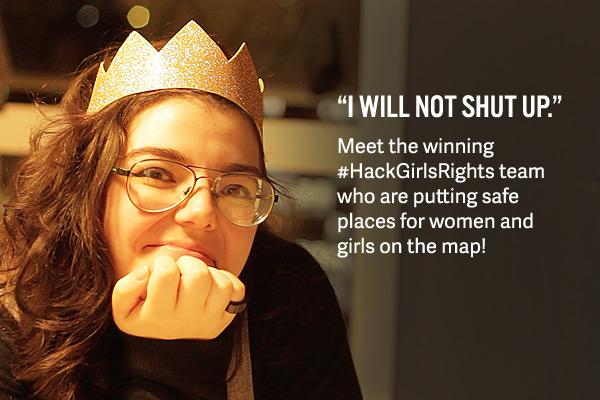
#HACKGIRLSRIGHTS WINNER: NÃO ME CALO (I WILL NOT SHUT UP)

Everyone experiences and navigates the world differently, but women are at higher risk of being harassed and assaulted. Every woman knows that there are certain venues, bars, and restaurants that they avoid in the city in which they live. Não Me Calo (I Will Not Shut Up) is an app and social networking tool that lets women review and rank public venues based on the level of safety they provide for women and girls. Não Me Calo also encourages women to fight for change by using these rankings to pressure business owners and governments to improve security in locations that have received unfavorable reviews.

In April 2015, a jury selected Não Me Calo as the winner of the #hackgirlsrights International Girls' Hackathon

Embedded image permalink

Source: http://ignite.globalfundforwomen.org/gallery/naomecalo

Thursday, 7 May 2015

Virtual Whiteboard Deekit

Although seriously long in the tooth and being disrupted by a plethora of startups, for many years Skype has existed as an almost ubiquitous app in any remote team’s toolkit.
So it seems apt that a new startup founded by a team of ex-Skype employees is set to tackle another aspect of online collaboration. Deekit, which exits private beta today, is a virtual and collaborative whiteboard to help remote teams work smarter.

“Working with remote teams has been a challenge in many ways – cultural differences, language differences, all the time people talk about the same things in different ways, sharing information across all locations,” she recalls.The Tallinn, Estonia-based startup is headed up by founder and CEO, Kaili Kleemeier, who was previously a Head of Operations at Skype. She and three colleagues quit the Internet calling giant in 2012 and spent a year researching ideas in the remote team space. They ended up focusing on creating a new virtual whiteboard, born out of Kleemeier’s experience collaborating with technical teams remotely, specifically helping Skype deal with incident management.

“But at the time of an incident, you need to put everything on steroids – explain things faster, solve things faster, be extremely transparent and so on. This experience literally lead me and the team to research in depth how can you collaborate really effectively.”
Part of the solution is to bring back the humble whiteboard, but one that is accessible via any HTML5 web browser, with dedicated mobile and tablet apps to follow. “Deek” is a Romani word for looking. As in “deek and you shall see”. The idea being that showing is often quicker than telling.
“Simple conversations are not effective when it comes to complex problem solving, sharing knowledge or brainstorming around creative ideas,” says Kleemeier. “For example, when developers are discussing an architecture change, a whiteboard is the most natural thing to jump to. With simple boxes and arrows you make a point within just a couple of minutes. It also applies in design, sales, working with team processes, product planning and much more.”
text tools
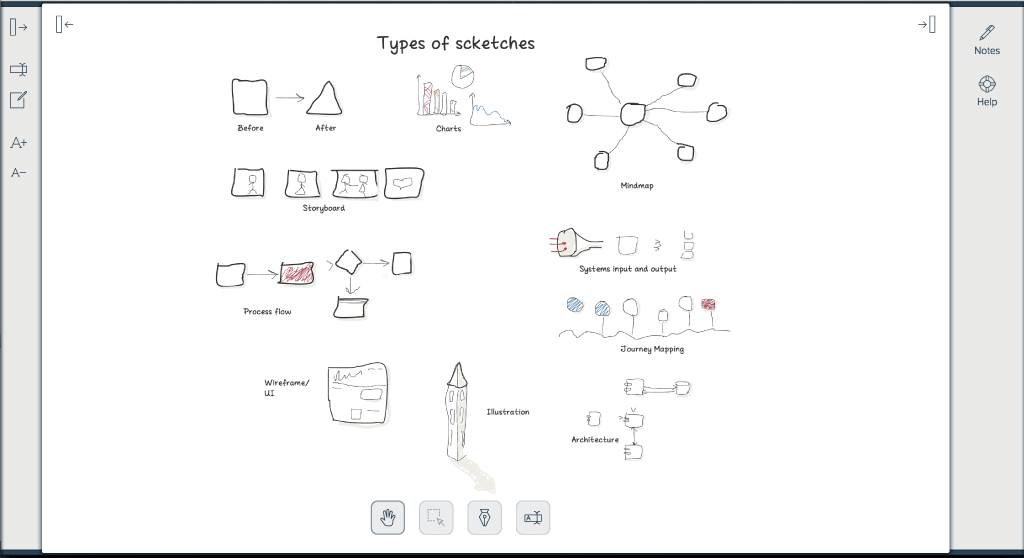
The Deekit app offers all of the whiteboard features you’d expect, such as drawing tools and the ability to add text. In addition, you can pin notes on the side, and the whole app is collaborative: anybody can contribute no matter where they are and in realtime. Boards can also be shared and archived for future reference.
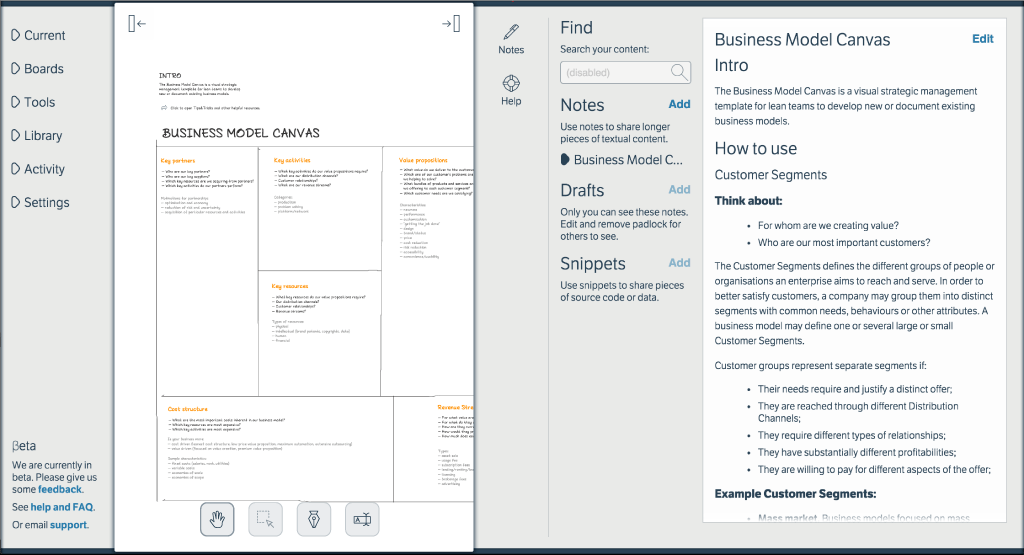
Another feature Kleemeier and her team have focused on is offering templates. These aren’t just simple design templates but also provide extensive instructions, such as how to run a business plan whiteboard session, or brainstorming a product roadmap.
templates
But, of course, virtual whiteboards aren’t new by any measure. Competitors in the space include Realtimeboard, Stormboard and Murally. Or even enterprise collaboration apps like Confluence and Sharepoint.
“Most enterprise software is overwhelming,” argues Kleemeier when asked about competitors. “Piles of tools and buttons that make you focus on choosing the tools and how to use them. When designing Deekit, we decided to take that all away. Deekit is designed to be simple and clean. To know what you want, before you want it. To provide the right tools when needed and keep them out of the way when not. So that you can focus on the task at hand — discussing your idea.”
Culled from Techcrunch.com

Tuesday, 5 May 2015

Childhood bullying: Worse long-term mental health than maltreatment by adult

Bullying adversely affects children in later life more than being maltreated, according to new research. A new study shows that children who have been bullied by peers suffer worse in the longer term than those who have been maltreated by adults according to new research from the University of Warwick.
A new study published in The Lancet Psychiatry shows that children who have been bullied by peers suffer worse in the longer term than those who have been maltreated by adults.
The research is led by Professor Dieter Wolke from Warwick's Department of Psychology and Warwick Medical School. 
There is already an established link between maltreatment by adults and the mental health consequences for children. Professor Wolke and his team wanted to examine whether long-term mental health issues among victims of bullying were related to having been maltreated by adults as well.
They looked at data from 4,026 participants in the UK ALSPAC study (Avon Longtitudinal Study of Parents and Children) and 1,273 participants from the US Great Smoky Mountain Study.
For ALSPAC they looked at reports of maltreatment between the ages of 8 weeks and 8.6 years; bullying at ages 8, 10 and 13; and mental health outcomes at age 18. Data from the Great Smoky Mountain Study had reports of maltreatment and bullying between the ages of 9 and 16, and mental health outcomes from 19-25 years old.
Professor Wolke said: "The mental health outcomes we were looking for included anxiety, depression or suicidal tendencies. Our results showed those who were bullied were more likely to suffer from mental health problems than those who were maltreated. Being both bullied and maltreated also increased the risk of overall mental health problems, anxiety and depression in both groups."
In the ALSPAC study 8.5% of children reported maltreatment only, 29.7% reported bullying only and 7% reported both maltreatment and bullying. In the Great Smoky Mountain Study, 15% reported maltreatment, 16.3% reported bullying and 9.8% reported maltreatment and bullying.
Professor Wolke added: "Being bullied is not a harmless rite of passage or an inevitable part of growing up; it has serious long-term consequences. It is important for schools, health services and other agencies to work together to reduce bullying and the adverse effects related to it."
The research is being presented at the Pediatric Academic Societies (PAS) annual meeting in San Diego.
Culled from University of Warwick